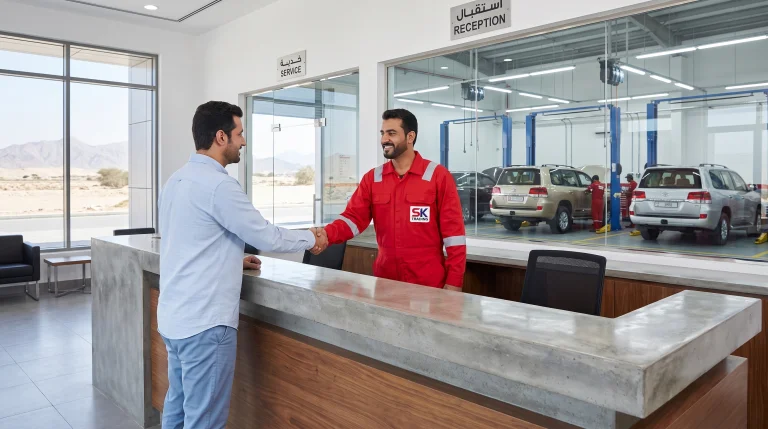
Bring your car in and tell us what you notice while driving. We'll start with a free inspection and then determine the necessary repairs based on the inspection findings. Our workshop is located in Al Maabilah Industrial Area, Muscat.
Sial Kingdom is an auto repair and maintenance workshop located in Al Maabilah Industrial Area, Muscat. You can bring your car in for a general inspection, computer diagnostics, routine maintenance, or repairs to the engine, transmission, brakes, suspension, air conditioning, and electrical system.
The inspection is free and precedes any repair decision: we inspect the car and determine the cause of the problem first, then we determine the work required based on the result of the inspection and not on the symptom alone.
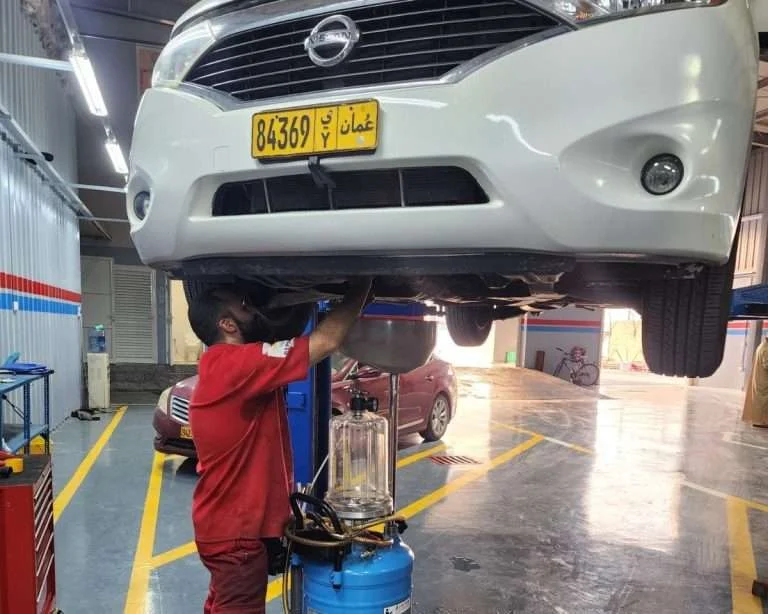
Misfiring, poor acceleration, knocking noises, smoke, or an illuminated engine light. We inspect and test before determining the repair.
Delayed gear shifting, slippage, vibration when shifting, or a noise that increases with speed. Automatic and manual.
Squeaking, weak pedal response, swerving when braking, or vibration. We inspect the brake pads, discs, and hydraulic system together.
A clicking noise when going over bumps, uneven tire wear, or unstable steering. We check the shock absorbers and suspension components.
The cooling weakens in traffic, there's hot air, an odor when starting the engine, or water inside the car. Weak cooling isn't always due to a lack of refrigerant.
Difficulty starting, battery constantly draining, lights or windows shutting off, or warning lights without any apparent mechanical reason.
We read the fault codes and operating data, then we examine the part that the code indicates instead of replacing it based on the code alone.
Change the oil and filters, check fluid levels and condition, and inspect parts that wear out with use.
Maintenance is a planned activity. Nothing has broken down yet, and you maintain the car so that it doesn't break down: changing the oil and filters, checking the fluids, and checking the parts that wear out over time.
The repair is a response to a malfunction. Something changed in the car, or the inspection revealed a damaged or worn part, so work was required.
In fact, the two things are very intertwined. A car that comes in for maintenance may turn out to have a leaking hose or worn-out brake pads, and fixing that while the car is on the lift is cheaper than bringing it back after a month.
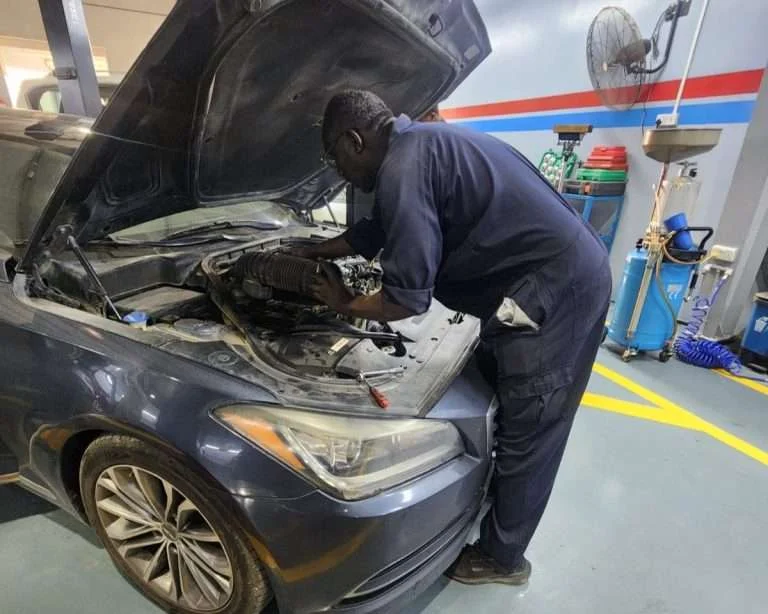
The symptom is not the fault. An overheated engine does not always mean that the problem is from one part; the cause may be in the cooling system, a leak, or another component affecting it.
Therefore, our work proceeds in a fixed order: Presentation, then examination, then diagnosis, then identifying the cause, then determining the required repair. Each step narrows the circle before the next, and no piece is requested before this sequence is completed.
The symptoms are similar. Vibration at high speeds can come from the tires, brakes, or suspension system. The warning light indicates a system malfunction, not that a specific component has failed.
Any one of these signs is sufficient to inspect the car, and the presence of several of them often means that the inspection is delayed.
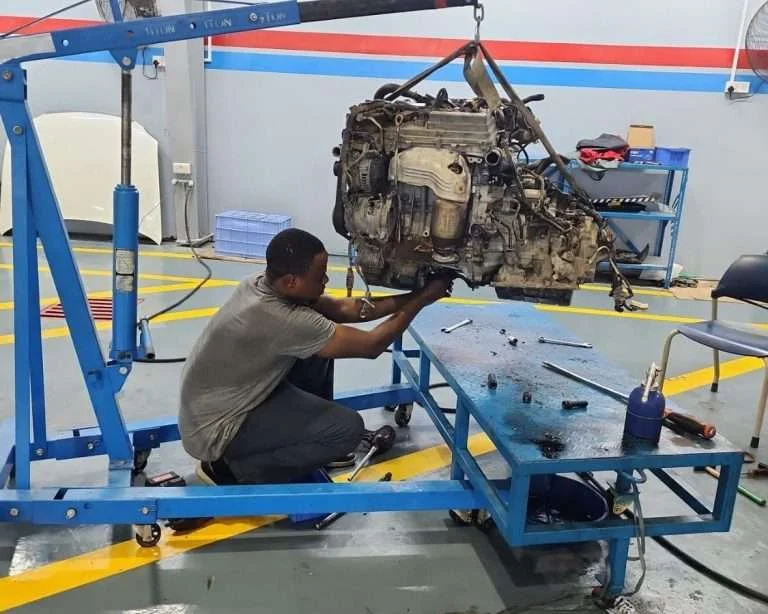
Replacing a part simply because it's the usual suspect is a guess you pay for. And when the guess is wrong, the customer has paid for a perfectly good part and their problem remains the same.
A computer scan is the beginning of the road, not the end. The device reads what the car's systems have recorded: fault codes, sensor readings, and operating data. It's excellent at narrowing down the search, but it won't tell you if a bushing is worn, a hose is rubbing against a bracket, or an electrical connection has oxidized.
These can be determined through direct inspection, pressure tests, electrical measurements, and load testing of the component. Most accurate diagnoses combine several of these methods, and the instrument's results should be interpreted as evidence, not a definitive judgment.
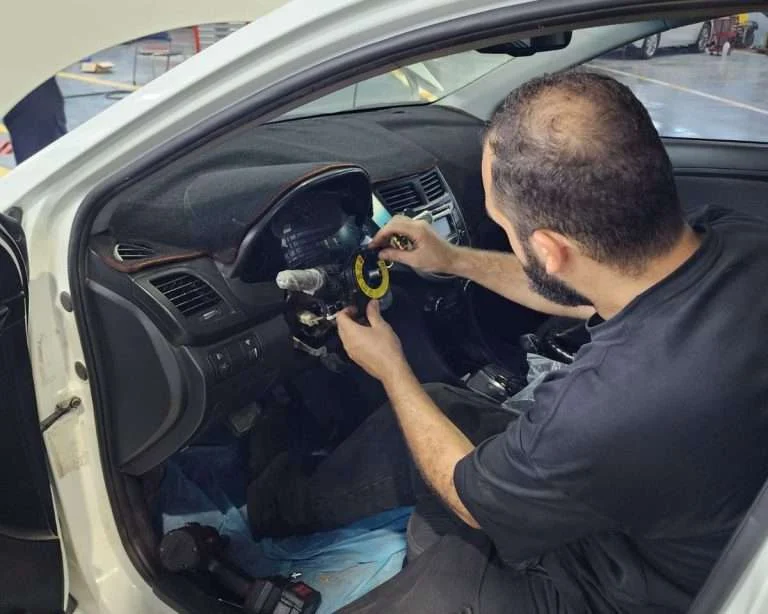
And any indicators related to the symptoms I mentioned.
And the effects of high temperature, if any.
And where it actually comes from — not where it drips from.
And the overall electrical condition of the car.
Stored in the car's systems, and the warning lights are illuminated.
The pads, discs, and pedal feel.
Suspension system components, shock absorbers, and steering parts.
The air conditioner's operation, and the condition of any part related to the aforementioned malfunction.
There is no single number in kilometers that works for all cars, and whoever gives you a single number is generalizing.
What truly determines the timing is the manufacturer's schedule for your specific model and engine, your driving habits, driving conditions, and maintenance history. Short trips within the city, high temperatures, and dust all put more strain on the oil and filters than regular highway driving.
If the maintenance logbook is unavailable (which is common with imported and used cars), bring the car and we will assess its condition instead of the logbook: the condition of the oil, filters, fluids, and worn parts gives a clear picture when the paperwork is missing.
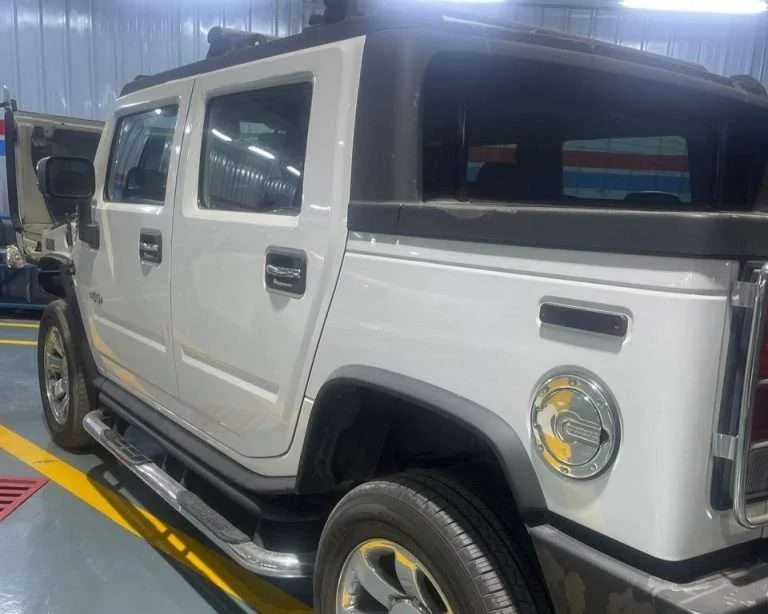
The workshop handles various types of cars: European brands such as Mercedes-Benz, BMW, Porsche, Land Rover and Range Rover, and American brands such as GMC and Chevrolet, in addition to Japanese and Korean cars, which make up a large part of what travels on Oman's roads.
The make and model of a car make more of a difference than many people realize. Diagnostic systems vary between manufacturers, maintenance procedures differ, fluid specifications vary, and a part that works for one engine might be faulty for another engine within the same model.
This is the practical reason for providing a diagnostic over parts order: identifying the vehicle and its specifications is part of knowing what you need.
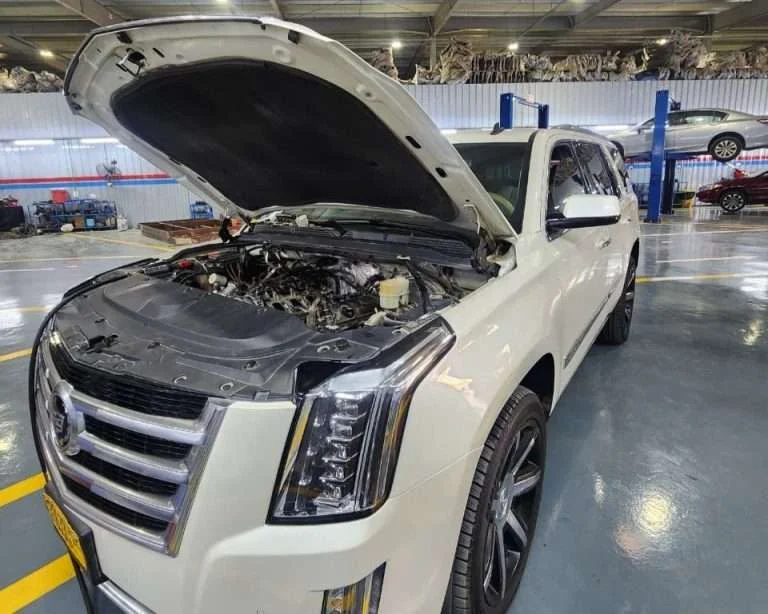
Twenty years of working on cars in Oman means that most of what enters the workshop is something we have seen before.
Don't pay to find out what the problem is. A proper inspection will determine if the car even needs repair.
The part is replaced after inspection and testing have identified the fault, not because the symptom points to it.
Reading fault codes and operating data from modern car systems requires specialized equipment.
The work is handled by technicians who specialize in the systems they work on, instead of one technician covering everything.
European, American, Japanese and Korean cars, each with its own procedures and parts requirements.
The work done is guaranteed. If a defect appears after the car has left, return it and we will inspect it.
Genuine parts are used where applicable to the vehicle and the repair required.
A warning light has come on, you're hearing an unusual noise, or you have an upcoming service appointment and don't know what it includes. Send us your car's make and model and a description of what you're noticing, and we'll tell you what to expect before you come in. The inspection itself is free.
Maintenance is planned work that keeps a car running before it breaks down. Repair comes after a fault appears, or after an inspection reveals a damaged part. A car may need both in one visit.
If anything changes: a new noise, a warning light, vibration, a leak, weak brakes, or the air conditioner stops cooling, you don't need to know the cause first; that's what the inspection is for.
Yes, the inspection is free. It's how we determine the car's actual needs before discussing any repairs.
Yes. We read fault codes and operating data from the vehicle's systems, then inspect the part or circuit the code indicates. The code narrows the search, but it doesn't alone confirm which part is faulty.
Yes, the workshop is multi-brand, including European cars such as Mercedes-Benz, BMW, Porsche and Land Rover, and American cars such as GMC and Chevrolet, in addition to Japanese and Korean cars.
Yes. If you notice more than one thing, mention them all when you bring the car in. Examining them all together is faster than separate visits, and it may turn out that different symptoms have the same cause.
It depends on the manufacturer's schedule for your model and engine, usage patterns, and driving conditions. If you don't have a service history, bring the car in and we'll assess its condition.
No. Parts are replaced only after inspection and testing have actually identified the fault.
Genuine spare parts are available where applicable to the vehicle and the required repair, and what suits each case depends on the make, model, and part itself.
The main workshop is located in Al Maabilah Industrial Area, Muscat, Sultanate of Oman. Opening hours are Saturday to Thursday, from 8:00 AM to 1:00 PM and from 3:30 PM to 9:00 PM. Closed on Fridays.
If the problem is related to a specific system in the car, you can go to the specialist service page to find out the details of the inspection and repair.
The main workshop is located in Al Maabilah Industrial Area in Muscat. It handles inspections, diagnostics, mechanical repairs, and routine maintenance, and serves vehicles from Muscat and the surrounding areas. Sial Kingdom also has two other branches in [location missing]. Al-Suwaiq وSohar.
Sial Kingdom Trading LLC
Al Maabilah Industrial Area, Muscat, Sultanate of Oman
Phone: +968 9192 9398
Email: sktradingllc98@gmail.com
Saturday – Thursday: 8:00 AM – 1:00 PM and 3:30 PM – 9:00 PM
Friday: closed
Full site details in Our workshop page in Al Maabilah.