
If you're in Seeb and your car breaks down, having some basic information ready before calling a workshop can save you time and help the mechanic narrow down the possibilities on the first visit. This guide explains what to mention when describing the problem and what happens next at the workshop.
What information do you prepare before contacting the workshop?
You don't need technical knowledge. Simply state the following clearly:
- Car type and model.
- Year of manufacture, if you know it.
- The main problem, as you notice it, is: noise, vibration, smell, leakage, or poor performance.
- Any warning light that appears on the dashboard.
- Any recent maintenance or repair may be related to the malfunction.
In what cases does the malfunction appear?
The timing of the fault is crucial for the technician, as the symptoms present during operation differ from those present during braking. Determine if the fault occurs in one of these situations:
- When starting the car, or after it has been parked for a long time.
- When accelerating or climbing.
- When braking.
- When turning or going over speed bumps.
- Only at a certain speed.
Also clarify whether the fault is constant or intermittent, as this changes the method of inspection.
Your description of the problem is a preliminary complaint, not a final diagnosis.
What you observe is the starting point, not the result. What you observe may have more than one cause, and the actual cause can only be determined by inspecting the vehicle. Therefore, we cannot confirm the cause of the malfunction over the phone or based solely on a description.
When necessary, we use computer diagnostics to read stored fault codes. Computer diagnostics are a paid service, and their results guide manual diagnostics but do not replace them.
Which service should I address my complaint to?
Once you've identified what you're observing and when it occurs, the next step becomes clearer. Here are some examples of what common observations might be related to:
- Warning light illuminated or unclear electronic fault
- Sound or vibration when braking
- Weak engine power or unusual noise from it
- Delay or roughness in changing speeds
- Weak air conditioner cooling
- Problem with battery, lighting, or electrical operation
These are illustrative examples and not a diagnosis, as the same observation may be related to more than one system in the car.
What you should check before approving the repair
Before any work begins on your car, ask for clarification on these points:
- The identified defect, if it has been confirmed by inspection.
- The proposed repair, or the next step in the investigation if the cause is still uncertain.
- The required parts, if the repair requires replacing a part.
- To obtain and approve the assessment before starting work.
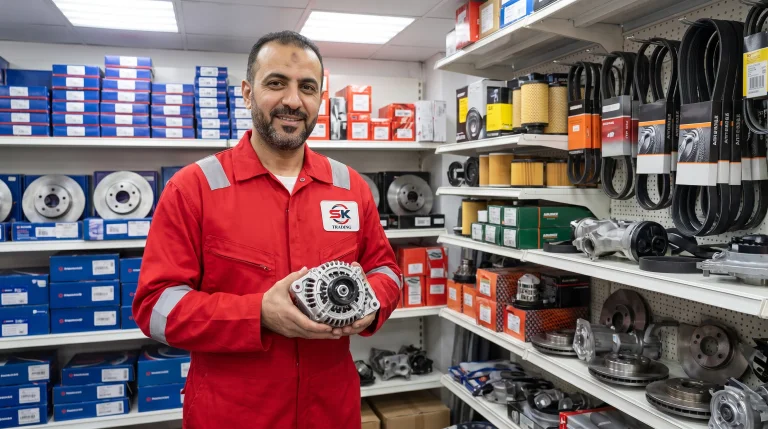
Regarding parts, we specify the type of part before installation: genuine or aftermarket. Our spare parts primarily focus on Kia and Hyundai vehicles.
Kia and Hyundai spare parts are available from us.
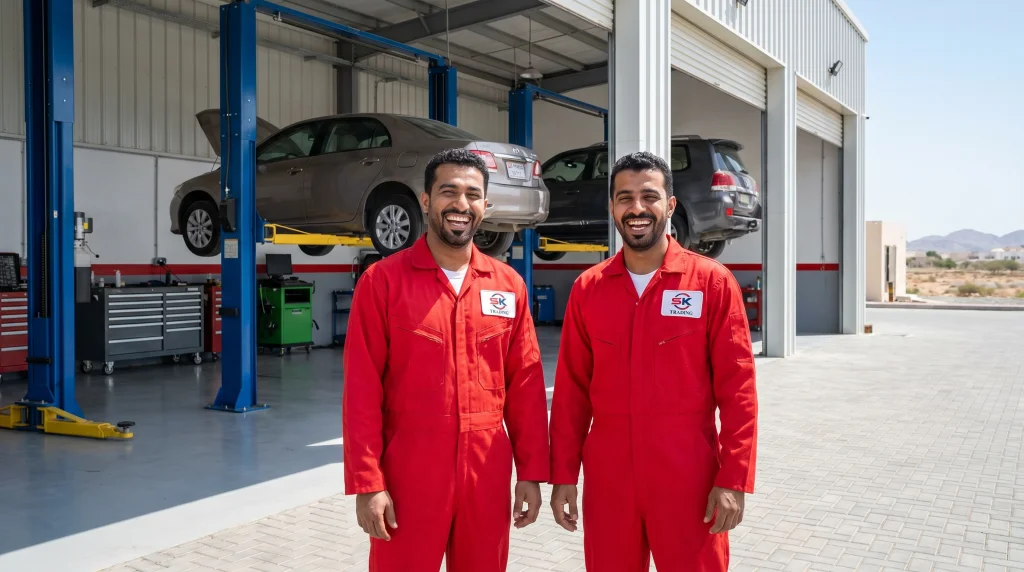
Visit the workshop in Al Maabilah Industrial Area
Our main workshop is located in Al Maabilah Industrial Area, Seeb, Muscat Governorate. If you require the full address, opening hours, and service details, they are listed on the branch page.
Location of Al Maabilah workshop and working hours.
Send a description of the problem via WhatsApp before visiting

One Response